
Pilates Explained: What It Is and Why People Practice It
Welcome to the digital sanctuary of The Wellness Concierge Bali. Whether you are stepping onto a mat for the first time or looking to deepen your holistic health journey, you have likely encountered the profound buzz surrounding Pilates. But what is Pilates and what is it good for? At its core, Pilates is much more than a fitness trend; it is a transformative somatic practice that bridges physical alignment with mindful awareness.
In this comprehensive guide, we will explore exactly what is Pilates, unpack the incredible health benefits of Pilates for beginners, and answer the most common questions about this empowering discipline. From mastering a Pilates core workout to understanding how it complements other conscious practices, this foundational guide will help you elevate your mind-body connection.
What is the Main Purpose of Pilates?
Created in the early 20th century by Joseph Pilates, this holistic system was originally called “Contrology.” The main purpose of a Pilates workout is to achieve complete coordination of body, mind, and spirit. It focuses heavily on the “powerhouse”—the deep stabilizing muscles of the abdomen, lower back, and pelvic floor.
Unlike high-impact workouts that rely on sheer force, Pilates exercises emphasize deliberate, controlled movements synced with conscious breathing. This mindful approach ensures that you are not just building superficial muscle, but developing functional strength, postural integrity, and profound internal awareness.
Types of Pilates Exercises: Mat, Reformer, and Beyond
As you dive into the wellness space, you will encounter several modalities of this practice. Understanding these variations will help you choose the right path for your personal journey.
- Mat Pilates: This is the most accessible form of the practice. Conducted entirely on the floor, Mat Pilates uses your own body weight as resistance. It is excellent for cultivating fundamental core strength and learning the mind-body principles of centering, concentration, and flow.
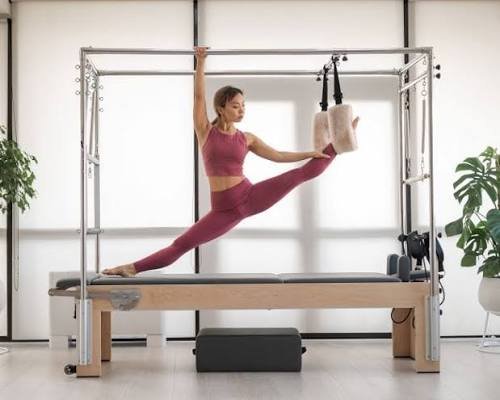
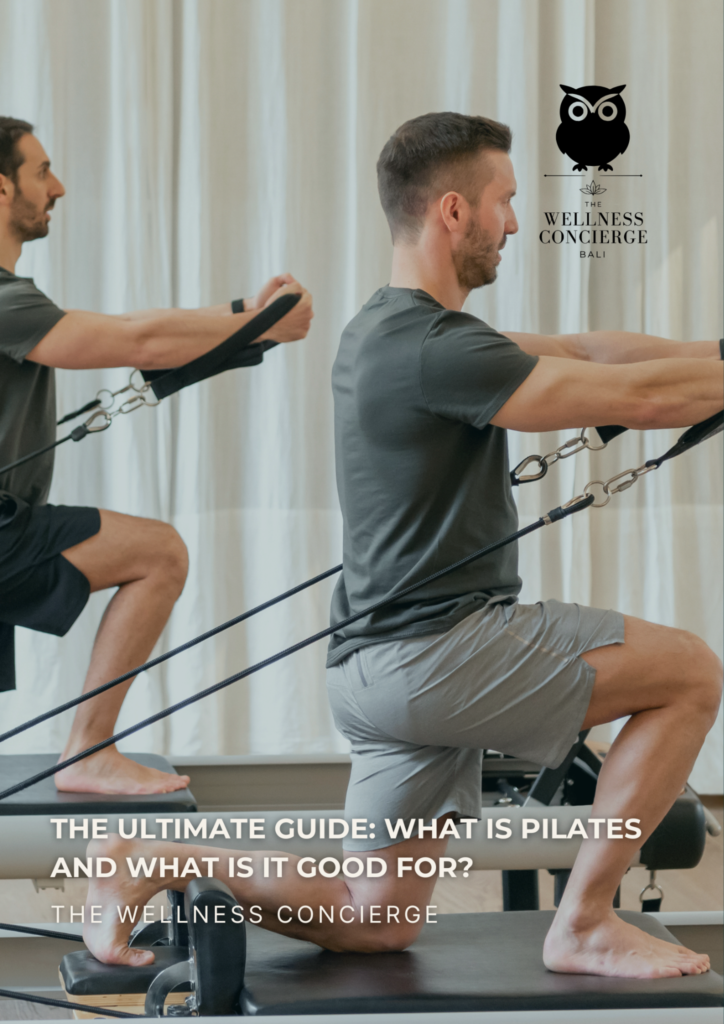
- Reformer Pilates: The Reformer is a specialized, bed-like apparatus equipped with springs, ropes, and a gliding carriage. The difference between Mat Pilates and Reformer Pilates lies primarily in this added mechanical resistance, which can either assist beginners in finding proper alignment or challenge advanced practitioners with dynamic tension.
- Wall Pilates: A modern adaptation that has gained incredible popularity, Wall Pilates utilizes a standard wall to provide resistance and support. It is a fantastic, accessible way to challenge your stability and deepen your stretches without needing specialized studio equipment.
Pilates vs Yoga: Understanding the Difference
At The Wellness Concierge Bali, we frequently guide clients through various movement modalities, leading to a common question: what is the difference between Pilates and Yoga?
While both are phenomenal mind-body practices that utilize breathwork and require focus, their origins and ultimate goals differ. Yoga is an ancient spiritual discipline rooted in Eastern philosophy, heavily focused on flexibility, prana (life force energy), and expanding consciousness. Pilates is a newer, anatomically focused system designed to rehabilitate the body, build core strength, and correct postural imbalances.
They are beautifully complementary. A well-rounded wellness regimen often includes both, alongside our other bespoke offerings like private Yoga classes, Qi gong, and meditation, creating a perfect harmony of strength, flexibility, and spiritual grounding.
What Does Pilates Do to Your Body?
When committing to a regular practice, the physical and mental transformations are profound. Here are the core Pilates benefits:
- Unshakable Core Strength: A dedicated Pilates core workout targets the transverse abdominis, fortifying your entire midsection and protecting your spine.
- Enhanced Flexibility and Posture: By simultaneously stretching and strengthening muscles, Pilates decompress your joints and elongates the spine, leading to a taller, more graceful posture.
- Mind-Body Centering: Just like mindful breathwork, Pilates requires intense focus on the present moment, calming the nervous system and reducing stress.
- Injury Prevention: By addressing muscular imbalances and teaching correct movement patterns, Pilates acts as powerful preventative care for your joints and ligaments.
Embracing the Journey: Pilates for Beginners
Starting Pilates for beginners can feel intimidating, but the practice is highly adaptable. Whether you are recovering from an injury or looking to elevate your athletic performance, exercises can be modified to meet your exact needs.
At The Wellness Concierge Bali, we believe that physical movement is just one gateway to holistic harmony. While strengthening your physical vessel through Pilates, you can deepen your healing journey through our exclusive wellness events. Imagine complementing your newfound core strength with the energetic clearing of a Melukat water blessing, the deep resonance of Sound healing, or the heart-opening magic of a Cacao ceremony. We also curate transformative experiences like Kundalini activation, Reiki healing, and Balinese Fire ceremonies to nurture your spirit just as deeply as you nurture your body.
Frequently Asked Questions (FAQs)
What is Pilates and what is it good for?
Pilates is a low-impact mind-body exercise system focused on core strength, spinal alignment, and flexibility. It is incredibly good for improving posture, building functional strength, reducing stress, and rehabilitating injuries.
What is the main purpose of Pilates?
The main purpose is to integrate the mind and body to achieve optimal movement efficiency. It focuses on strengthening the “powerhouse” (core) to support the spine and peripheral joints.
What is the difference between Pilates and Yoga?
Yoga traditionally focuses on spiritual wellness, flexibility, and holding expansive postures (asanas), while Pilates focuses more on precise, repetitive movements designed to build core strength and correct physical alignment.
What are the health benefits of Pilates for beginners?
Beginners will quickly notice improved posture, increased core stability, better mind-muscle connection, enhanced breathing capacity, and a general reduction in daily aches and stiffness
What does Pilates do to your body?
It elongates and tones muscles without adding bulk, aligns the skeletal structure, strengthens the pelvic floor, and dramatically improves balance and coordination.
What is the difference between Mat Pilates and Reformer Pilates?
Mat Pilates uses only gravity and body weight for resistance on a floor mat. Reformer Pilates uses a specialized machine with springs and pulleys to provide varied, dynamic resistance.
. Is Pilates good for weight loss and toning?
While not primarily a cardiovascular workout, Pilates is excellent for toning the body, building lean muscle mass, and improving metabolic efficiency, which can support a healthy weight loss journey when paired with proper nutrition.
How often should you do Pilates as a beginner?
For optimal results and to build a strong foundation, beginners should aim to practice 2 to 3 times a week. Consistency is key to mastering the mind-body connection.
What muscles does Pilates target?
While it is a full-body workout, it predominantly targets the deep core muscles (transverse abdominis), obliques, lower back, pelvic floor, glutes, and the stabilizing muscles around the shoulders and hips.
Is Pilates suitable for back pain relief?
Yes, highly. By strengthening the deep abdominal muscles that support the spine and improving pelvic alignment, Pilates is frequently recommended by physical therapists to alleviate and prevent non-specific lower back pain.